How a Whole Home Water Filter Boosts Water Heater Efficiency Saves Money and Extends Lifespan
A water heater works hardest when the water entering the tank is full of minerals, sediment, chlorine, and other impurities. That extra load does not always show up right away. It builds slowly, inside the tank, on heating elements, around valves, and throughout the plumbing connected to the system.
A whole home water filter helps solve the problem at the source. Instead of treating water at one faucet, it filters water as it enters the house. That means cleaner water flows to showers, sinks, appliances, and, most importantly for this topic, the water heater.
Cleaner incoming water can reduce buildup, help the heater transfer heat more efficiently, support more consistent hot water, and lower the risk of avoidable repairs. For many households, it can also help stretch the life of one of the most expensive appliances in the home.

A whole home water filter improves the water before it reaches the heater
A whole home water filter treats water at the point where the main water line enters the house. From there, filtered water moves through the plumbing system to every fixture and appliance.
The exact contaminants it removes depend on the filter type, but many systems target common water quality problems such as:
Sediment
Rust particles
Chlorine taste and odor
Some chemicals
Dirt and suspended particles
Mineral-related issues when paired with softening or scale-control media
This matters because water heaters are not just storage tanks. They are heat-transfer systems. Anything that interferes with heat transfer can make the unit work harder.
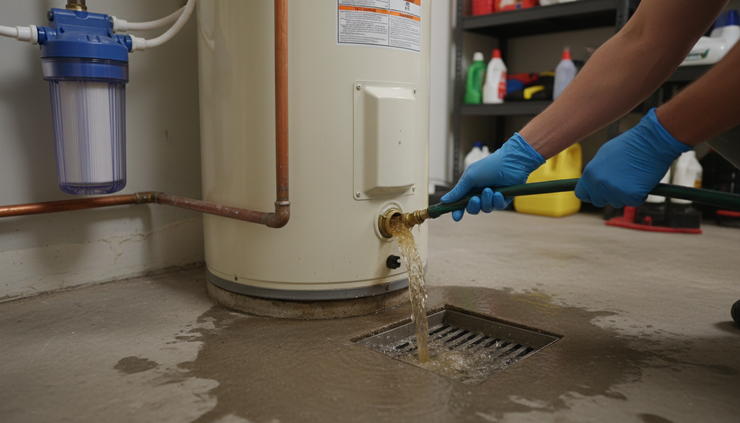
In a traditional tank water heater, cold water enters the tank and gets heated by gas burners or electric elements. As water sits and heats, minerals and sediment can settle at the bottom. Over time, that layer acts like insulation between the heat source and the water.
In a tankless water heater, water passes through narrow internal heat exchangers. Scale and sediment can cling to these passages, reducing flow and making it harder for the system to heat water quickly.
In both cases, cleaner water gives the appliance a better starting point.
A filter is not a cure for every water problem, and it does not replace routine service. Still, it can reduce the amount of debris and impurities that reach the heater in the first place. Less contamination means less buildup for the system to fight.
Cleaner water reduces buildup and helps the heater run efficiently
The connection between water quality and water heater performance is simple: buildup makes heating less efficient.
When sediment collects at the bottom of a tank, the burner or heating element must work through that layer before heat reaches the water. The heater may run longer to reach the set temperature. That can mean slower recovery after showers, less consistent hot water, and higher energy use.
You may notice signs such as:
Popping or rumbling sounds from the tank
Hot water that runs out faster than usual
Longer wait times for hot water recovery
Higher utility bills without a clear reason
Cloudy or gritty hot water
Frequent flushing needs
Some noise from a water heater can come from expanding and contracting metal parts, especially as the unit ages. Yet a loud popping sound often points to trapped water boiling under sediment. That is a sign the tank is working harder than it should.
A whole home water filter helps by catching particles before they enter the heater. If the home also has mineral-heavy water, a filter system with the right scale-control or softening component may help reduce mineral accumulation.
That point is especially important in areas with mineral-rich water. When you combine hard water, water heater issues often show up sooner because dissolved calcium and magnesium can form scale when heated. Scale sticks to hot surfaces, including heating elements and heat exchangers.
Cleaner water helps the heater maintain better contact between the heat source and the water. Better heat transfer means the appliance can do its job with less strain.

Filtered water can extend the lifespan of a water heater
Most homeowners notice a water heater only when hot water disappears. By then, the problem may have been developing for years.
Sediment and scale can damage water heaters in several ways. They can increase heat stress, interfere with valves, narrow water passages, wear down components, and make flushing less effective if buildup becomes heavy.
Filtered water can reduce that stress. The heater still ages, but it may age more slowly when it does not have to process as much debris and mineral load every day.
For tank water heaters, cleaner water may help protect:
The tank lining
Heating elements
The drain valve
The temperature and pressure relief valve
The anode rod
Internal fittings
For tankless water heaters, cleaner water may help protect:
The heat exchanger
Flow sensors
Inlet screens
Internal valves
Small water passages
This does not mean a filter makes a water heater last forever. Installation quality, water pressure, temperature settings, maintenance habits, and appliance quality all matter. But water quality plays a major role.
Think of it like changing the air filter in an HVAC system. A clean filter does not eliminate the need for service, but it reduces the strain caused by dirt and debris. A whole home water filter does something similar for plumbing appliances that handle water every day.
That is why water quality should be part of any serious maintenance plan. For example, people searching for Water heater maintenance Denver often see advice about flushing tanks, checking anode rods, and inspecting for leaks. Those steps are valuable, but improving incoming water quality can also support the heater between service visits.
Lower energy bills and fewer repairs can make the filter pay off over time
A whole home water filter is an upfront investment. The savings happen over time, usually through reduced wear, better performance, and fewer water-quality-related problems.
The biggest cost benefits often fall into three categories.
Lower energy waste
When a water heater stays cleaner inside, it can transfer heat more effectively. That means it may not need to run as long to heat the same amount of water.
Energy savings vary by home, water quality, heater type, and usage. A large household that uses a lot of hot water may see more benefit than a small household with light use. Still, reducing sediment and scale is one of the most practical ways to help a heater avoid wasted effort.
Fewer maintenance problems
Filtered water can reduce the amount of sediment that needs to be flushed from a tank. It may also help protect valves and small components from grit and debris.
Routine maintenance is still necessary. A tank water heater should be checked and flushed according to manufacturer guidance and local water conditions. Tankless units often need periodic descaling, especially where mineral levels are high.
A whole home filter can make that maintenance more effective because less contamination enters the system between visits.
Longer appliance life
Replacing a water heater is expensive. The total cost can include the unit, labor, permits, code updates, disposal, and possible plumbing changes. A filter that helps delay premature failure may offer real long-term value.
The savings are not only about avoiding replacement. A cleaner system can also reduce the chance of surprise service calls, emergency repairs, and hot water disruptions.
Cleaner water does not just taste better. It can help expensive home systems run with less damage from the inside out.
A whole home filter also protects more than the water heater
The water heater may be the focus, but it is not the only appliance affected by water quality.
Filtered water can also help reduce buildup and debris in:
Washing machines
Dishwashers
Ice makers
Refrigerator water lines
Faucets and showerheads
Toilet fill valves
Plumbing fixtures
This broader protection matters because the hot water system touches much of the home. If sediment and minerals clog showerheads, stain fixtures, and reduce appliance performance, the heater is likely dealing with the same water quality issues internally.
A whole home filter also improves daily comfort in ways that are easier to notice. Water may smell better, look clearer, and feel cleaner depending on the system. Clothes may rinse better, and fixtures may need less frequent cleaning.
For homes with chlorine-treated municipal water, a carbon-based whole home filter can reduce chlorine taste and odor. For homes on wells, sediment filtration may be especially useful before water reaches appliances. Well water may also require testing for iron, manganese, bacteria, or other concerns before choosing equipment.
The main point is simple: the right filter should match the actual water problem.
How to choose the right whole home water filter
Not every system works the same way. A filter that solves one problem may do little for another. Choosing based only on price or popularity can lead to disappointment.
Start with the water itself.
Test your water before buying equipment
A water test gives you a clearer picture of what needs to be removed or reduced. If the home uses city water, the local water quality report can provide a helpful starting point. A home test can add details about hardness, chlorine, sediment, pH, iron, and other concerns.
For well water, testing is even more important. Private wells can vary widely, even between nearby homes.
A good test helps answer questions such as:
Is the main issue sediment?
Is the water hard?
Is chlorine affecting taste and smell?
Are iron or manganese causing stains?
Is the pH too low or too high?
Are there contaminants that require specialized treatment?
Once those answers are clear, choosing the right system becomes much easier.
Match the filter to the problem
Whole home filtration can include several types of treatment. Some systems use one method, while others combine multiple stages.
Water concern | Common solution | Why it helps the water heater |
Sediment, sand, rust | Sediment filter | Keeps particles from settling in the tank or clogging screens |
Chlorine taste and odor | Carbon filter | Improves water quality throughout the home |
Hardness minerals | Water softener or scale-control system | Reduces scale formation on heated surfaces |
Iron or manganese | Specialty filtration | Helps limit staining and appliance fouling |
Low or high pH | Neutralizing or conditioning system | Helps protect plumbing and equipment |
A sediment filter is often the first line of defense. It catches visible particles before they reach the heater. In homes with hard water, a softener or scale-control system may be needed in addition to filtration.
Carbon filters are popular for improving taste and odor, but they do not remove significant hardness minerals on their own. That distinction matters. If the goal is to protect a heater from scale, a carbon-only system may not be enough.
Check flow rate and home size
A whole home filter must handle the home’s water demand. If the system is too small, it can reduce water pressure when multiple fixtures run at once.
Look at the number of bathrooms, the number of people in the home, and peak usage times. For example, a house with several showers, a dishwasher, and a washing machine may need a higher-capacity system than a small home with light water use.
The filter should protect the water heater without making daily water use frustrating.
Plan for maintenance
Every filter needs care. Some cartridges require regular replacement. Some tanks need media changes after several years. Water softeners need salt. Certain systems need periodic cleaning or service.
Before buying, check:
Filter replacement schedule
Cartridge or media cost
Required water pressure range
Installation space
Drain requirements
Warranty terms
Availability of replacement parts
A filter that never gets maintained can become a restriction instead of a benefit. Choose a system with upkeep that fits the household’s habits and budget.
Think about installation location
Most whole home filters are installed near the main water shutoff, before water branches off to fixtures and appliances. That placement allows the system to treat water before it reaches the heater.
In some setups, a plumber may recommend a sediment pre-filter before a softener or carbon filter. The right order depends on the equipment and the water test results.
Professional installation is often the safest choice, especially if the setup involves pressure regulation, bypass valves, drain connections, or electrical bonding on metal pipes.

A filter works best with smart water heater maintenance
A whole home water filter can reduce buildup, but it should work alongside basic water heater care.
Good maintenance habits include:
Flush the tank based on manufacturer guidance and water conditions.
Check the temperature setting to avoid unnecessary overheating.
Inspect the area around the heater for leaks.
Listen for rumbling, popping, or unusual burner sounds.
Replace or inspect the anode rod when needed.
Service tankless units according to the manufacturer’s schedule.
Replace filter cartridges on time.
Temperature also matters. Setting the water heater too high can increase scale formation and energy use. Many homes use 120°F as a practical setting, though household needs can vary. Always follow safety guidance and manufacturer instructions.
If hot water runs out faster than it used to, or if energy bills climb without a clear reason, do not assume the heater is failing. Buildup may be reducing efficiency. A professional inspection can identify whether flushing, descaling, repair, or replacement makes the most sense.
The best results come from treating the cause, not just the symptoms
Water heater problems often look like appliance problems. Sometimes they are. Heating elements fail. Valves wear out. Tanks corrode. Burners need service.
But in many homes, poor water quality makes those problems worse.
A whole home water filter helps by improving the water before it reaches the heater. That cleaner water can reduce sediment, limit buildup, support better heat transfer, and protect key components. Over time, the benefits can show up as more reliable hot water, fewer service issues, lower energy waste, and a longer appliance life.
The best system starts with a water test, matches the home’s actual water concerns, has enough flow capacity, and gets maintained on schedule.
Treat the water first, and the water heater has a much easier job.


Comments