How Denver Water Sources Shape Taste Quality and Home Safety
A glass of water in Denver starts long before it reaches a kitchen faucet. It begins as mountain snow, runs through rivers, rests in reservoirs, moves through tunnels and pipes, and passes through treatment plants before entering homes. Each step can change how the water tastes, smells, and behaves in plumbing.
That journey matters. The source of the water influences its mineral content, the treatment it needs, and the small taste differences people notice from season to season. Denver water is generally known for high-quality mountain supply, but “good water” can still taste different depending on weather, runoff, reservoir conditions, and the pipes inside a home.

Denver’s water begins in mountain rivers and reservoirs
Denver does not rely on one single lake, river, or well. Its water supply is a connected system fed largely by mountain snowmelt from river basins and stored in reservoirs until it is needed.
The main source types include:
Rivers and streams
Snowmelt and rainfall flow into mountain creeks and larger rivers. These moving waters carry minerals from rock and soil, organic matter from forests, and sediment during heavy runoff.
Reservoirs
Reservoirs store water so the city has supply through dry periods, high-demand summer months, and low-snow years. Storage also gives sediment time to settle, which can make treatment easier.
Transmountain water
Some water used in the Denver area comes from the western side of the Continental Divide and is moved through collection systems into the Front Range supply network. This helps balance demand but also adds variety to source-water chemistry.
Seasonal runoff
Spring snowmelt can bring a rush of colder, faster-moving water. Late summer and fall conditions can be different, with warmer reservoirs and more influence from algae or organic material.
Because the system blends water from different places, the exact makeup of Denver tap water can shift through the year. That does not mean the water is unsafe. It means treatment teams must adjust to what nature sends them.
Why source water affects taste
Water is often described as “clean” or “fresh,” but taste is more specific than that. The sources that feed Denver’s system can influence several qualities people notice at home.
Minerals shape mouthfeel and flavor
As water moves over rock and soil, it picks up dissolved minerals such as calcium, magnesium, sodium, and bicarbonate. Mineral levels affect whether water tastes crisp, flat, sweet, bitter, or slightly chalky.
Mountain snowmelt often starts with relatively low mineral content compared with groundwater from deep wells. That can give treated water a lighter taste. But reservoirs, river channels, and distribution pipes can all add subtle changes.
Hardness also comes from minerals. Hard water can leave scale on fixtures and kettles. Softer water tends to lather more easily with soap. Denver-area water is often considered less hard than water in many regions that rely heavily on groundwater, but hardness can still vary by source blend and home plumbing.
Organic matter can cause earthy notes
Forested watersheds naturally add leaves, pine needles, soil particles, and other organic matter to streams and reservoirs. During warmer months, reservoirs can also develop algae-related compounds that create earthy or musty tastes.
Two common compounds associated with these flavors are geosmin and MIB. They can be noticed by the human nose at very low levels. They are usually a taste and odor issue, not a health concern at typical levels in treated municipal water.
Treatment plants can reduce these compounds, but they can be stubborn. That is why a glass of water may taste slightly earthy after certain weather patterns, reservoir turnover, or warm stretches.
Chlorine or chloramine can stand out
Disinfection protects water as it travels through miles of pipe. Without it, bacteria and other microbes could grow in the distribution system. The tradeoff is taste.
Some people notice a swimming-pool-like smell or a sharper taste. That usually comes from disinfectant residual, which is intentionally maintained to keep water safe all the way to the tap.
The strength of that taste can change based on:
Distance from the treatment plant
Pipe age and condition
Water temperature
Seasonal treatment adjustments
How long water sits in household plumbing
A simple carbon filter can often reduce disinfectant taste, but the disinfectant itself serves an important safety purpose before the water reaches the home.

Reservoirs do more than store water
Reservoirs are not just giant holding tanks. They change water in ways that affect treatment and taste.
When river water enters a reservoir, heavier sediment can settle to the bottom. This helps reduce turbidity, which is the cloudiness caused by suspended particles. Lower turbidity often makes filtration more efficient.
Reservoirs also create layers. In warm months, sun heats the upper water while deeper water stays colder. These layers can have different oxygen levels, temperatures, and chemistry. When the weather changes, reservoirs can “turn over,” mixing layers that were previously separate.
That mixing can affect:
Taste and odor
Manganese or iron levels
Organic matter
Algae-related compounds
Treatment needs at the plant
Wildfire and drought can also influence reservoir water. After a fire in a watershed, storms can wash ash, soil, and debris into streams. Drought can concentrate minerals and organic material as water levels drop. Treatment plants are built to respond to changing conditions, but these events can make the job more complex.
How source water shapes treatment
The goal of treatment is simple: make water safe, clear, stable, and pleasant to drink. The process changes depending on what is in the source water on a given day.
Most surface-water treatment systems use several major steps.
Screening removes large debris
Before water reaches the main treatment process, screens can remove sticks, leaves, and larger material. This protects equipment and prepares water for the next steps.
Coagulation and settling remove fine particles
Tiny particles in river and reservoir water are often too small to settle on their own. Treatment plants add coagulants that help these particles clump together. Once they form larger floc, they can settle out more easily.
This step matters after storms, spring runoff, or wildfire-related sediment flows, when water can carry more suspended material.
Filtration polishes the water
Filters remove remaining particles after settling. Filtration may involve layers of sand, anthracite, granular activated carbon, or other media depending on plant design.
Good filtration improves clarity and helps remove material that could interfere with disinfection. It also helps reduce some taste and odor compounds.
Disinfection protects public health
Disinfection targets disease-causing organisms. It also leaves a small residual in the water so it stays protected while moving through pipes and storage tanks.
This is where some taste concerns begin. A faint disinfectant smell can be normal, especially when water is warm or has been sitting in indoor plumbing. Letting water sit in an open pitcher in the refrigerator can reduce some chlorine taste, although this does not remove all disinfectants in every system.
Corrosion control protects plumbing
Treated water must be stable enough that it does not aggressively corrode pipes. Utilities often adjust pH and chemistry to reduce the chance that metals from plumbing enter the water.
This is especially important in older homes. Even when water leaves a treatment plant in excellent condition, household pipes, solder, faucets, or service lines can affect what comes out of the tap.
The home is the final part of the water system
People often judge water quality by what happens at the faucet, but the faucet is only the end point. The home itself can change taste, odor, and safety.
Older plumbing can contribute metallic flavors. Water that sits overnight may taste stale because it has been in contact with pipes and fixtures for hours. Water heaters can create odor issues in hot water that are not present in cold water. Faucet aerators can trap sediment, rubber particles, or scale.
If water tastes different in only one tap, the likely cause is inside the home. If every tap has the same sudden change, the cause may be source water, treatment changes, nearby main work, or distribution-system conditions.
A few simple checks help narrow it down:
What you notice | Likely place to look |
Metallic taste only first thing in the morning | Household plumbing or fixtures |
Earthy taste from every cold tap | Seasonal source water or reservoir conditions |
Rotten-egg odor only in hot water | Water heater issue |
Chlorine smell that fades after chilling | Disinfectant taste |
Grit at one faucet | Aerator, fixture, or local pipe sediment |
Practical ways to improve taste at home
Most taste issues do not require major equipment. Start with small, low-cost steps before installing a whole-home system.
Use cold water for drinking and cooking
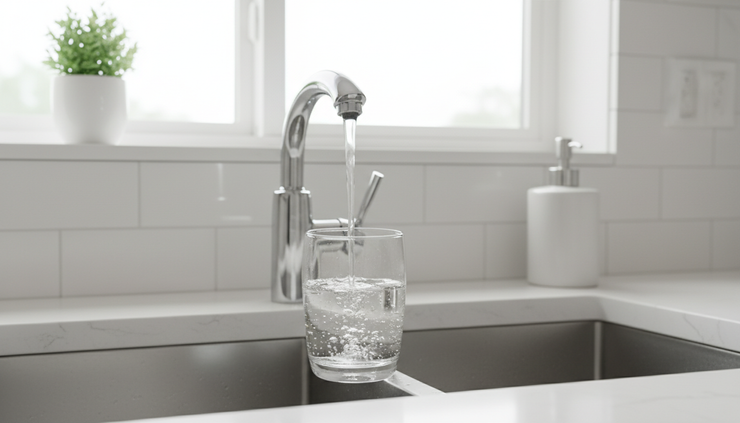
Cold water is the best choice for drinking, coffee, tea, and cooking. Hot water can pick up more metals from plumbing and may carry sediment from the water heater.
If water has been sitting for several hours, run the cold tap until the temperature changes. This brings in fresher water from the main.
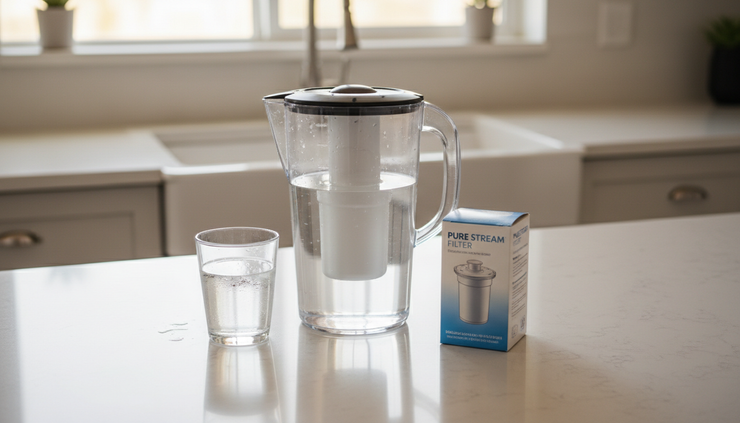
Chill water in a pitcher
Refrigeration can make water taste cleaner. Cold water suppresses some odors and gives disinfectant time to dissipate when chlorine is present.
Use a clean covered pitcher, especially if storing water for more than a day. Wash it often so the pitcher itself does not become the source of off flavors.
Clean faucet aerators
Aerators are small screens at the end of faucets. They can collect mineral flakes, sediment, and tiny bits of plumbing material.
Unscrew the aerator, rinse it, and soak it in vinegar if mineral scale has built up. This simple task can improve flow and remove grit that affects taste.
Replace refrigerator filters on schedule
A refrigerator filter can help with taste, but only if maintained. Old filters can clog, slow flow, or become a source of unpleasant flavors.
Follow the manufacturer’s replacement schedule. If the refrigerator has not been used for a while, flush water through the dispenser before drinking.
Choose the right filter for the concern
Not all filters do the same job. A basic activated carbon pitcher can improve chlorine taste and odor. A faucet-mounted carbon filter may do the same with faster flow. Reverse osmosis systems can reduce many dissolved substances, but they cost more, waste some water, and require maintenance.
Look for filters certified by NSF/ANSI standards for the specific issue you want to address. For example, a filter certified for chlorine taste and odor is different from one certified for lead reduction.
This is also where searches for water filtration Denver can get confusing. A good system should match the actual water concern, not just the broad promise of “better water.”
Test when there is a specific concern
If a home has older plumbing, a known lead service line, unusual taste, staining, or infants in the household, testing can provide clarity. Use a certified lab for health-related concerns rather than relying only on color-change strips.
Testing is especially useful when symptoms point to the home rather than the public supply, such as metallic taste from one fixture or blue-green staining that may suggest copper corrosion.
When taste changes deserve attention
Many taste changes are harmless, but some should be taken seriously.
Contact the water provider or consider testing if:
Water suddenly becomes discolored and does not clear after flushing
A strong chemical, fuel-like, or solvent odor appears
Neighbors notice the same unusual change
Water has a persistent metallic taste
Sediment appears throughout the home
A boil water advisory has been issued nearby
Someone in the household has a health condition that requires extra water precautions
Use official notices for safety guidance. If a boil advisory is active, follow it carefully for drinking, cooking, brushing teeth, and preparing infant formula.
Why Denver’s water can taste different through the year
Seasonal change is one of the biggest reasons water does not taste exactly the same every month.
In spring, melting snow can increase runoff. That may raise turbidity and bring more natural organic material into rivers. Treatment plants respond by adjusting coagulants, filtration, and disinfectant practices.
In summer, reservoirs warm. Algae-related taste and odor compounds can become more noticeable. Water demand also rises because of outdoor watering, which can change flow patterns in the distribution system.
In fall, reservoirs may mix as temperatures shift. This can temporarily change mineral levels, oxygen levels, or taste. In winter, colder water can taste crisper and may carry odors less strongly.
These changes are part of managing a surface-water system in a mountain climate. The key point is that taste is not a perfect measure of safety. Water can taste slightly different and still meet drinking water standards. By contrast, water can taste fine and still deserve testing if old plumbing is a concern.
A smarter way to think about home water safety
The safest approach is to think in layers.
The watershed supplies the raw water. Reservoirs store and balance it. Treatment plants remove particles, manage taste issues, and disinfect it. Distribution pipes move it across the city. Household plumbing delivers it to the glass.
Each layer matters.
For everyday use, these habits make the biggest difference:
Read the annual water quality report
It explains regulated contaminants, treatment performance, and source-water information in plain terms.
Flush stagnant water
Run cold water after long periods of nonuse, especially before drinking.
Maintain fixtures and filters
Clean aerators and replace filter cartridges on time.
Use certified products
Match filters to the concern, such as chlorine taste, lead, or particulates.
Pay attention to patterns
One bad-tasting tap points to the fixture or plumbing. The whole home may point to the supply, water heater, or service line.
Test when needed
Testing is the best way to answer questions about lead, copper, or other home-specific concerns.
The takeaway for Denver homes
Denver’s water taste is shaped by a long path through snowpack, rivers, reservoirs, treatment plants, city mains, and home plumbing. Mountain sources help give the water its character, while reservoirs and seasonal conditions can add natural variation. Treatment keeps the supply safe, but it can also leave mild disinfectant flavors that some people notice.
At home, small steps often make the biggest difference. Drink cold water, flush taps after stagnation, clean aerators, maintain filters, and test when plumbing or health concerns call for it.
A better glass of water starts with understanding where it came from and where it has been before it reached the faucet.


Comments